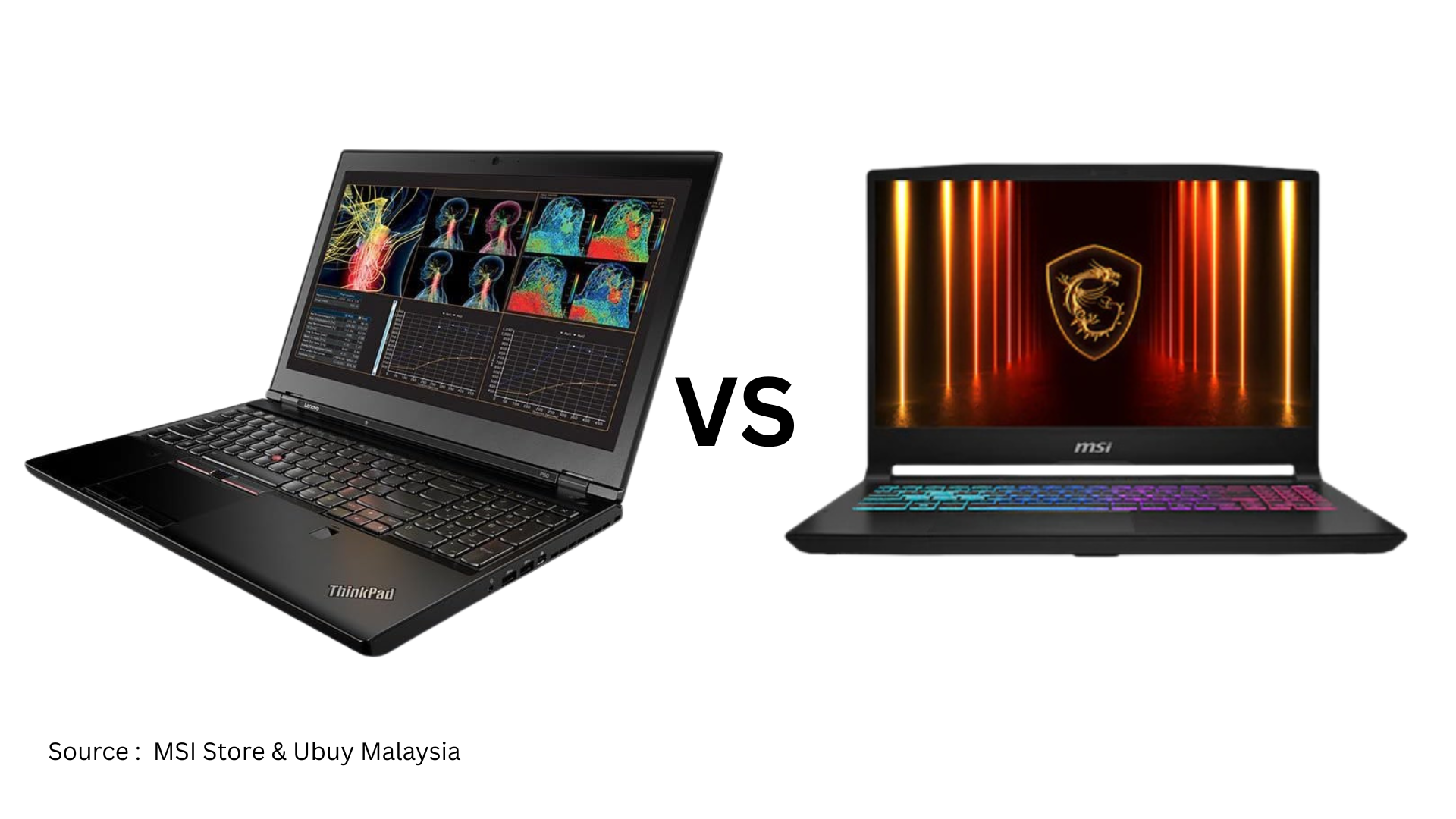
Selangor, El Sky News – In today’s tech market, laptops are designed to serve different needs, and two of the most performance-driven categories are workstation laptops and gaming laptops. While both are built for demanding tasks, their purposes and optimizations differ greatly.
Workstation laptops are primarily designed for professional workloads such as 3D modeling, CAD design, video editing, and data analysis. These machines often come equipped with professional-grade components that focus on reliability and accuracy. A workstation usually features GPUs that support certified drivers for software used in industries like architecture, engineering, and animation. Build quality also tends to be more robust, with better cooling systems and connectivity options suitable for multi-display setups and enterprise environments.
Gaming laptops, on the other hand, focus on delivering high frame rates, smooth graphics, and an immersive entertainment experience. They typically use consumer-grade GPUs designed for gaming performance and visual effects. The design language of gaming laptops is often more aggressive, with RGB lighting, high-refresh-rate screens, and audio systems tuned for games and media.
In terms of performance, gaming laptops can handle many of the same creative tasks that workstations do, such as video editing or 3D rendering. However, they may not offer the same driver optimization or long-term reliability that professional users require. Conversely, workstation laptops are not optimized for gaming; while they can technically run games, they may not deliver the same fluid experience due to different GPU drivers and refresh rate limitations.
Another key distinction lies in pricing and durability. Workstation laptops tend to cost more because of specialized hardware, professional certifications, and build quality aimed at long-term stability. Gaming laptops, while often more affordable for similar raw performance, are optimized for short bursts of high power rather than sustained workloads.
In short, the choice depends on the user’s needs. A workstation laptop is ideal for professionals who require accuracy, stability, and certified hardware support. Meanwhile, a gaming laptop is better suited for users who prioritize entertainment, speed, and visual performance.
Both categories share one common trait: they represent the upper tier of laptop technology, each excelling in its own domain—one for precision and productivity, the other for power and play.